
Restoring Chinook Salmon Habitat in the Cedar River
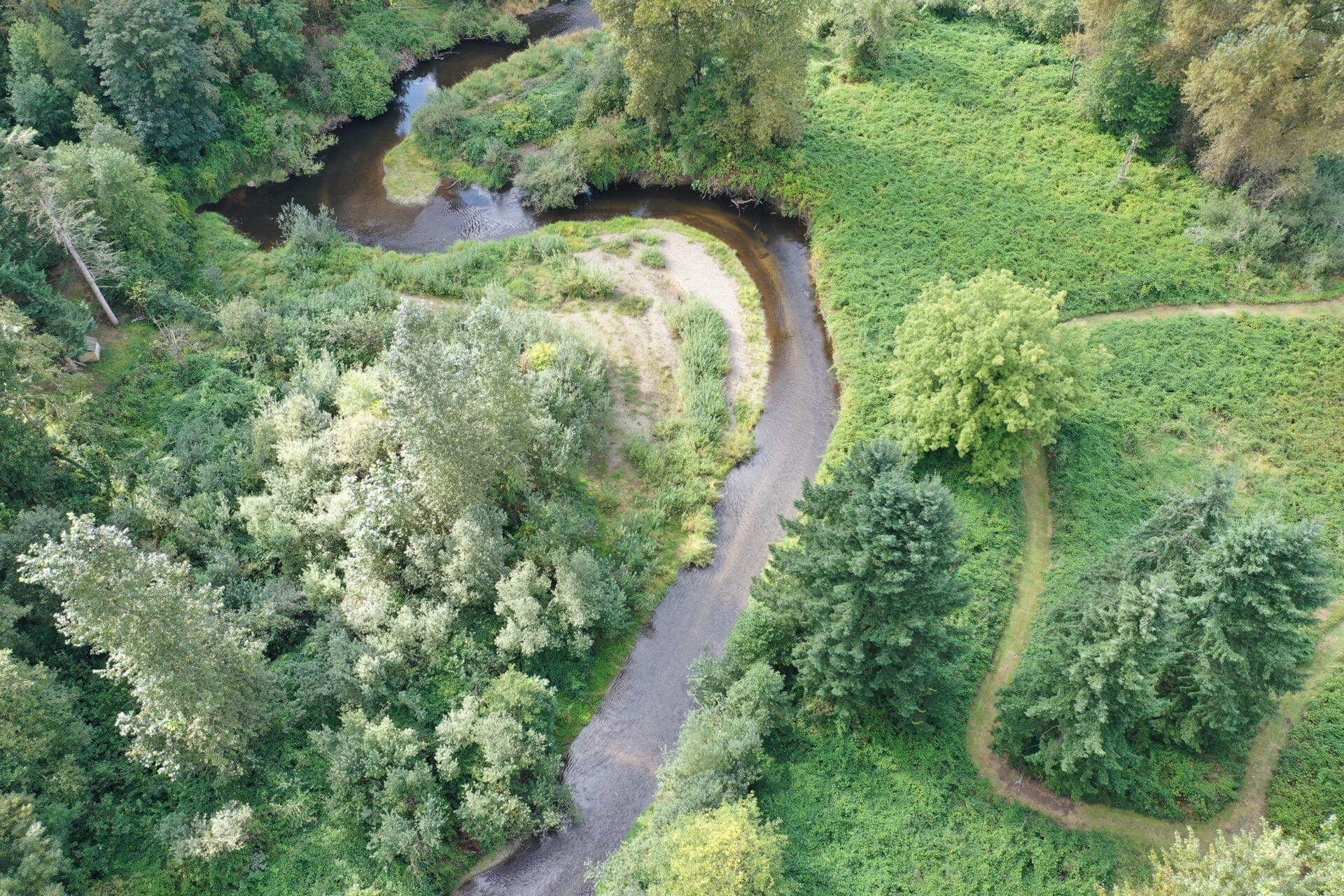
The Cedar River is a 45-mile-long waterway fed by the Cascade Mountains that drains into lakes and floodplains throughout the Cedar River Watershed. It’s a major artery of life that moves nutrients through vital freshwater systems within the west side of the Mountains to Sound Greenway National Heritage Area. It provides over a million residents in the greater Seattle area with drinking water. Native people have been connected to the Cedar River since time immemorial and have fished and managed land within the Cedar River Basin for generations.
The watershed is home to declining populations of salmon, steelhead, and other fish that use the river as their spawning ground. As well as a decades-long collaborative effort to restore their numbers.
Why the Cedar River Needs Help

Development has straightened and confined the Cedar River, creating unnatural conditions that have degraded vital fish habitat and caused flooding for neighboring communities. King County and the City of Seattle have worked with partners and homeowners to relocate residents and structures out of the Cedar River floodplain, conserve and restore dozens of acres of land along the river, set levees back, install large woody material to create side channels, reconnect floodplains, remove non-native plants, and replant natives to help this vital wildlife corridor recover. Some of these King County-led efforts, like a major restoration of a mile-long segment in Riverbend, have already mitigated serious floods during recent record flood events, showing that restoration is just as much about wildlife protection as it is about safety in our communities.
The Mountains to Sound Greenway Trust has spent over a decade collaborating with King County, volunteers, and nearby residents to help rehabilitate one of the only spawning grounds for Cedar Watershed populations of Chinook salmon. This restoration is not only critical to the survival of this threatened species, but it also creates healthier waterways and climate resiliency for human communities. The Greenway Trust’s efforts build on decades of collaboration between non-profits, government agencies, and homeowners to protect this vital waterway. This work is part of a decades-long salmon recovery partnership that restores thousands of acres of riparian habitat throughout King County.
As a vital spawning and rearing habitat for the largest number of wild endangered Chinook salmon in the watershed, rising temperatures from climate change further complicate every part of their lifecycle. Hotter, lower summer water levels make migration and finding suitable spawning areas difficult, while increased winter flooding creates harsh conditions for newly hatched fry. With dwindling salmon populations, restoration along the Cedar River is a vital way to provide complex habitat and cooler, cleaner water as salmon journey from Puget Sound to the mountainous regions of the Cedar River Watershed.
“Despite the loss of over half of the historic habitat suitable for fish propagation and rearing—first documented by the Watershed Management Committee in the 1990s—restoration efforts are underway to reverse the damage.”

Restoring What’s Been Lost
The Cedar River and its tributaries are the most important remaining aquatic and wildlife corridors in the Lake Washington system. But it wasn’t until the 90s that people began to understand just how sensitive these ecosystems were to human activity. In 1998, local leaders created a shared plan to help salmon recover, forming the Lake Washington/Cedar/Sammamish Watershed Salmon Recovery Council. That same year, the King County Council approved Motion 10379—establishing a way for the county to acquire parcels of land around the Cedar River—to start restoring degraded riparian habitat. King County has worked to acquire lands to create uninterrupted habitats that can be restored and protected. Since 2007, collaborative partnerships have powered restoration to transform these acquired lands back into healthy habitat.
Starting in 2023, the Mountains to Sound Greenway Trust joined this effort by partnering with the King County Noxious Weed Control Program, landowners, and volunteers to enhance riparian resilience. Over the years, that work has resulted in the removal of non-native species like blackberry, knotweed, tansy ragwort, and butterfly bush. The Greenway Trust has restored 22 miles of this vital waterway, using thousands of native trees to improve stream complexity and habitat conditions. Together, we monitor key areas and provide targeted support where it’s needed most.

How We’re Improving River Conditions:
- Restore habitat by planting over 5,500 native trees and shrubs
- Enhance Riparian Resiliency by removing non-native species like knotweed and blackberry
- Work with landowners to protect undeveloped areas, retain forest cover, and restore degraded sites.
- Increase awareness and support for salmon recovery by engaging the public in volunteer events
Riparian Restoration at Belmondo Reach & Dorre Don Natural Area
The Greenway Trust began leading an effort to restore Belmondo Reach in 2019 and remove non-native species. In 2027, the Greenway Trust will partner with the King County Department of Natural Resources and Parks (DNRP) and the King County Noxious Weed Control Program (KCNWCP) to restore salmon habitat on nearly 24 acres of floodplain along the lower Cedar River at Belmondo Reach and Dorre Don Natural Area. The Greenway Trust will implement phased restoration over five years to control and treat noxious weed infestations across the site, working with volunteers to help restore this area.
Project Support:
- King County Noxious Weed Program (funding and technical support).
- Cedar River Council (For spearheading conservation and restoration efforts along the Cedar River)
- King County Basin Steward (ecological monitoring and guidance).
Funding Sources for the Greenway Trust’s Cedar River Restoration Projects:
- WRIA 8 Cooperative Watershed Management (CWM) and administered through King County Flood Control District F
- WRIA 8 Salmon Recovery Funding Board (SRFB) and administered by the Washington Recreation and Conservation Office (RCO)
Want to help improve salmon habitat along the Cedar River? Sign up for our newsletter to learn about upcoming events or learn how you can partner with us if you own property along this vital salmon corridor.